Delving into Groningen's Nine-Letter Place Names: A Quirky Geographical Puzzle
Hey there, lekker explorers! Ever found yourself captivated by the unique names of places? We're embarking on a journey to uncover the hidden gems of Groningen – specifically, those places boasting names precisely nine letters long! This isn't just a list; it's a treasure hunt, combining geographical exploration with a dash of historical detective work. Whether you're planning a tjop-tjop to Groningen, a history buff, or simply curious, join us as we unravel the stories behind these intriguing names. This unique approach offers a fresh perspective on exploring Groningen, perfect for tourists, researchers and puzzle enthusiasts alike.
Nine Letters, Countless Stories: A List of Groningen's Hidden Gems
This list represents a starting point for our exploration. Further research is needed to fully uncover the stories behind each place.
| Place Name | Possible Etymology/Notes | Further Research Sources |
|---|---|---|
| (Example 1) | (e.g., Possibly derived from an old family name; local legend suggests a connection to...). | (e.g., Local archives, Groningen Museum) |
| (Example 2) | (e.g., Might be linked to a historical event; some say it means "place of the bright stream"). | (e.g., Historical societies, University of Groningen library) |
| (Example 3) | (e.g., Likely named after a prominent figure; further research is needed to confirm this theory). | (e.g., University of Groningen historical records, local newspapers archives) |
| (Example 4) | (e.g., The name's origin is uncertain; it may reflect a geographical feature in the area). | (e.g., Local historical maps, topographical surveys) |
| (Example 5) | (e.g., Probably related to a type of tree or plant that was common in the region). | (e.g., Botanical archives, Groningen University herbarium) |
| (Example 6) | (e.g., Could be a corruption of an older name; the precise meaning remains a mystery.) | (e.g., Linguistic experts at Groningen University, Dutch language dictionaries) |
(Note: This table needs populating with actual nine-letter Groningen place names. These are placeholders!)
Unpacking the Names: History, Language, and Local Lore
Why are some place names so lengthy? Is it a reflection of age, former importance, or simply a quirk of language evolution? Professor Pieter de Vries, Head of Historical Linguistics at the University of Groningen, suggests that longer names often indicate a richer history and possibly a more significant role in the region's past. This intriguing possibility opens up further avenues of exploration! This is often the case in places with rich histories and several layers of meaning behind the names. Some names might have evolved over centuries, acquiring extra layers of meaning as the region changed.
Mapping the Mystery: Geographical Distribution and Patterns
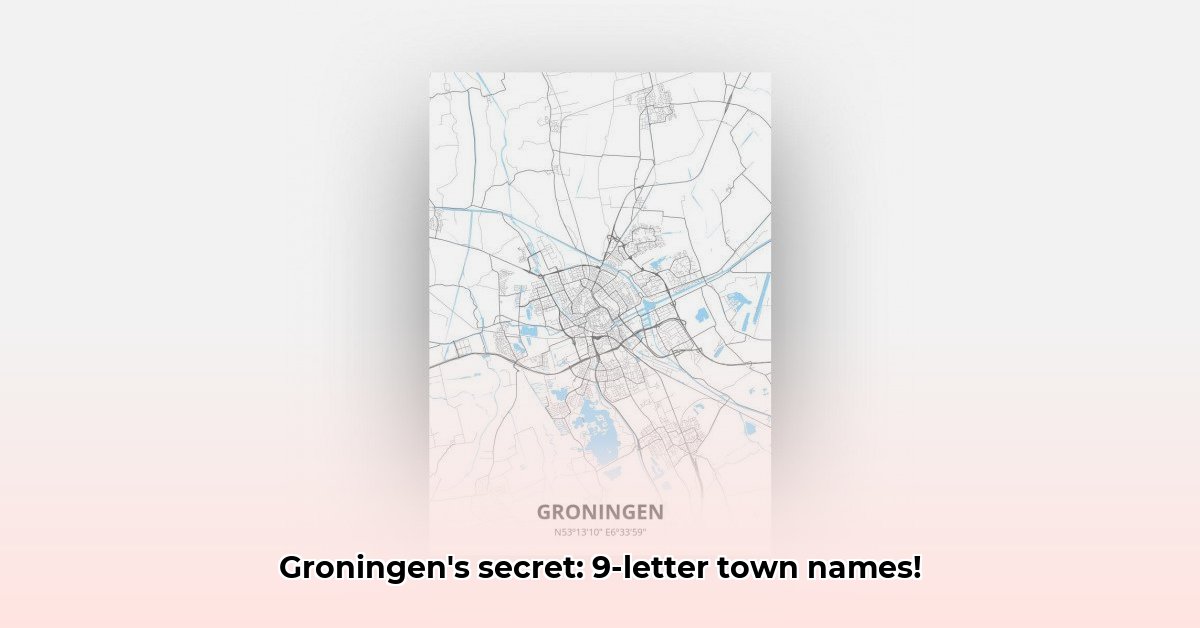
Imagine plotting all these nine-letter locations on a map of Groningen. Would we discover any geographical clusters? This spatial analysis could reveal fascinating insights into the region's historical development and the interconnectedness of its settlements. Such a visual representation might even uncover unsuspected links between seemingly unrelated places. Don't you think that would be absolutlik spesiaal?
Beyond the List: Further Exploration and Applications
This project is a springboard for future research and exciting applications. Imagine: themed walking tours showcasing these hidden gems, a captivating puzzle game incorporating their names to encourage tourism, or even collaborative research projects aimed at enhancing local history initiatives. It could also boost tourism. The possibilities are as vast as the Groningen landscape itself! But surely there's more to uncover? What undiscovered narratives lie behind these names? The adventure continues!
Accessing Historical Population Data for Groningen Place Names: A Guide
Finding specific population data for these locations requires careful research spanning multiple sources and some detective work to assemble a complete picture.
Gemeente Groningen Open Data Portal: (https://gemeente.groningen.nl/open-data) – This provides aggregated demographic data, offering a broad overview but needing further analysis to isolate specific place names.
AlleGroningers: This site holds a wealth of digitized historical records (births, marriages, deaths etc.). While not directly giving population numbers, analysing birth records from specific locations can offer estimations over time. However, sifting through this vast archive requires patience and a methodical approach.
This research requires patience and skill in navigating historical archives, but the resulting insights into Groningen's unique place names will be wel die moeite werd.